
Product quality is the guarantee, corporate reputation is life, and mutual benefit is the requirement.
2023-08-10
Design principles and construction points of square and round ventilation ducts
Ventilation ducts are crucial components in buildings, and their design and construction must follow certain principles and key points. This article introduces the design principles and construction key points of ventilation ducts with a "heavenly round and earthly square" concept, helping readers better understand relevant knowledge about ventilation ducts. First, the design of ventilation ducts should follow the principle of "heavenly round and earthly square." This means that the design of ventilation ducts should adapt to different building shapes and layouts, making air flow smoother. During the design process, the particularities of the building, such as floor height and spatial layout, should be considered to ensure that the ventilation duct design maximizes ventilation efficiency. Second, the construction of ventilation ducts also needs to follow certain key points. First, choosing appropriate materials is crucial. The materials of ventilation ducts should have good corrosion resistance and high-temperature resistance to ensure long-term stable operation. Second, during construction, attention must be paid to the sealing of the ducts to avoid air leakage. In addition, ventilation equipment, such as fans and vents, should be installed reasonably to ensure optimal ventilation efficiency. When designing and constructing ventilation ducts, confusion and unexpected events should also be considered. For example, when the use of a building changes, the design and layout of the ventilation ducts may need to be adjusted accordingly.

2023-07-31
Installation details and precautions for square and round ventilation ducts
The correct installation of a "Tian Yuan Di Fang" ventilation duct system is a complex undertaking that requires attention to detail in every aspect. Careful consideration and strict adherence to standards are necessary in design, material selection, pipe connections, route planning, and bracket installation. Only by ensuring that every detail is properly handled can the normal operation and safety of the ventilation system be guaranteed. The installation of a "Tian Yuan Di Fang" ventilation duct system should pay attention to the following details and matters: 1. Lower pipes should use rectangular or square cross-sections, allowing the bottom of the pipe to rest completely on the ground for better support. 2. Upper pipes can use circular cross-sections to reduce air resistance, but the size should not be excessive. 3. Pipe interfaces should have transition sections to ensure smooth airflow. The angle of the transition section should not be too sharp. 4. Vertical pipes should be equipped with ladders or scaffolding for easy maintenance and cleaning. 5. All pipe interfaces must be tightly sealed to prevent air leaks. Elastic materials can compensate for thermal expansion and contraction at the interfaces. 6. Pipes must have adequate support to prevent vibration. The number of support points should not be too few or too many. 7. Locations for inspection and cleaning access points need to be planned. Access points can be equipped with access doors. 8. Large pipes should have appropriate framing or hanging structures to support their weight. 9. Pipes should have adequate protection against...
2023-07-21
Construction technology of square and round ventilation ducts
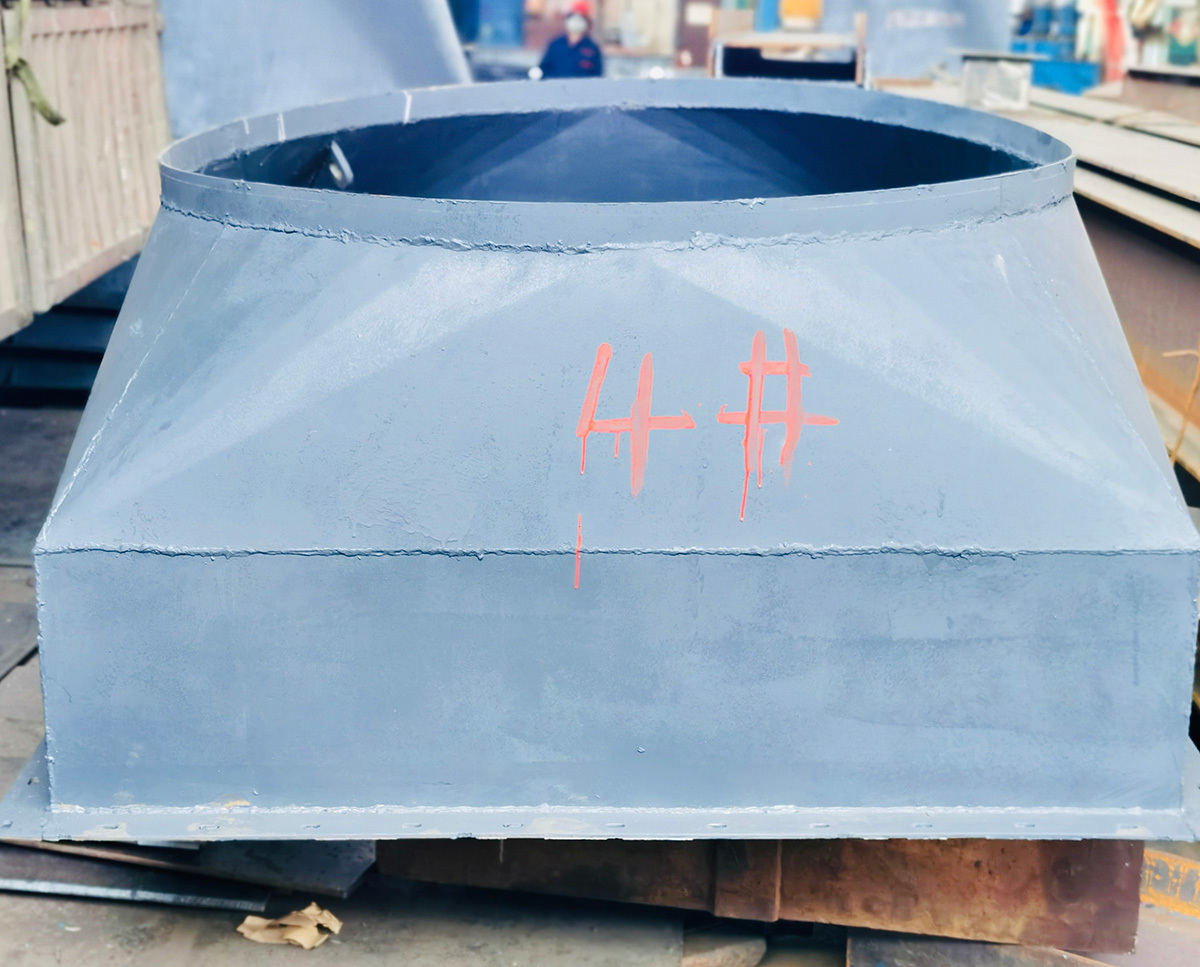
Tianyuan difang ventilation ducts, also known as square-round transition ducts, have a circular lower body and a square upper body. They are generally used for components with special structures, such as the connection between circular ventilation ducts and fan outlets, and air conditioning units and fan inlets. Specifications for Tianyuan difang ventilation ducts: 325mm-1020mm, various materials and models of Tianyuan difang and square-round transition ducts can also be custom-made according to customer needs. The construction process of Tianyuan difang ventilation ducts can be mainly divided into the following steps: 1. Measurement and layout: According to the design drawings, measure the installation location of the pipeline on site, determine the pipeline direction, and make markings. 2. Pipe segment prefabrication: According to the design dimensions, use pipe materials (such as steel plates) to make pipe segments. 3. Annular welding of pipe segments: Bend the pipe segments into rings according to the design circular arc, and close the pipe rings through welding. 4. Pipe section assembly: Weld and assemble multiple pipe rings to form the entire pipe section. Welding distortion should be controlled. 5. Pipeline installation: Install the prefabricated pipe sections in place according to the on-site markings and connect them to other pipelines or equipment. 6. Reinforcement and strengthening: Install reinforcing ribs at pipe bends or at equipment connection interfaces to ensure strength. 7. Air tightness test: After completion of installation, conduct a pressure test

2023-07-14
Steel Component Classification and Product Introduction
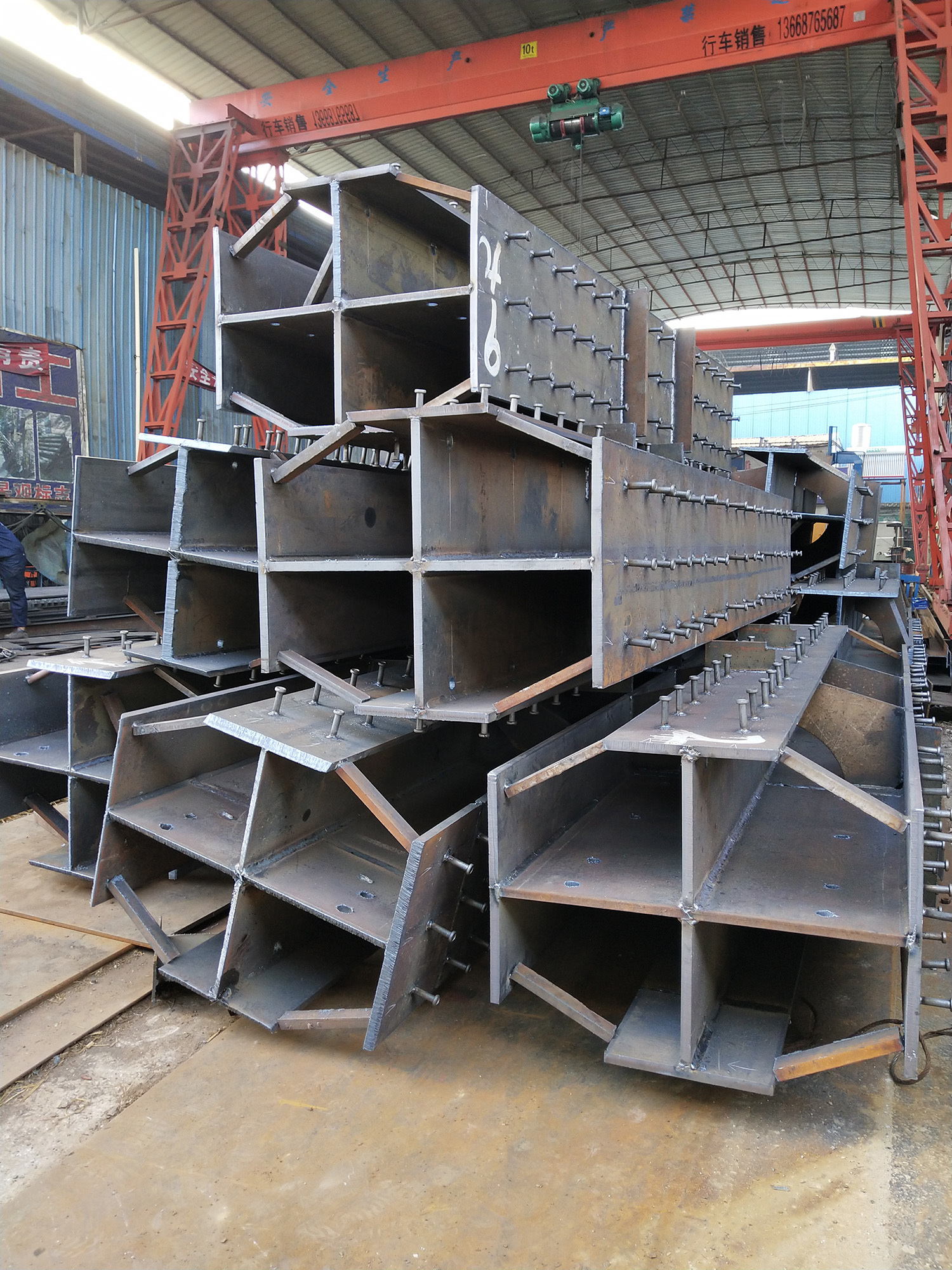
Steel components themselves are a non-combustible building material, but if the temperature is between 450℃ and 650℃, the fire resistance limit of steel components without fire protection treatment is about 15 minutes. With a rapid increase in temperature, the steel components will lose their load-bearing capacity, undergo excessive deformation, and be unable to continue to bear loads, which will lead to collapse accidents. Therefore, fire protection treatment must be carried out for steel strengthening to ensure that the fire resistance limit of the steel components meets the requirements of the design specifications.

2023-07-14
What are the characteristics of steel structures?
Steel structures primarily refer to structures where the main load-bearing components are made of steel. These include steel columns, steel beams, steel structure foundations, steel roof trusses (though for larger factory spans, steel roof trusses are now almost universally used), and steel roofing. Note that steel structure walls can also use brick for cladding. Due to China's increased steel production, many steel structure factories have been built, which can be categorized into light and heavy steel structures. Industrial and residential buildings constructed from steel are called steel structures.

2023-07-11
Reasons for setting the ventilation duct to be round and square
Air ducts with a square-to-round transition, also known as "square and round transition ducts", have a square lower section and a round upper section. They are typically used for components with special structural requirements, such as connecting circular ventilation ducts to fan outlets, or air handling units to fan inlets. The main reasons for using square-to-round transition ducts are: 1. Reduced air resistance: The circular shape of the duct allows for smoother airflow, reducing the resistance caused by the air stream contacting the duct walls. 2. Increased ventilation efficiency: Circular ducts offer better performance, allowing for faster air movement and increased air volume. 3. Reduced dust accumulation: The smoother inner walls of circular ducts make them less prone to dust accumulation. 4. Reduced noise: Circular ducts minimize airflow turbulence and eddies, thus reducing noise. 5. Standardized components: Using circular ducts allows for the standardization of elbows, branches, and other components, simplifying construction. 6. Easier cleaning: The smooth interior of circular ducts allows for easier cleaning. 7. Standardized production: The standardized specifications of circular ducts facilitate mass industrial production. 8. Aesthetically pleasing: Using circular ducts in ceilings creates a more elegant and comfortable aesthetic. In summary, square-to-round transition ducts improve ventilation efficiency and are a superior option.
Tel:
0871-63926562|13700675159 (Mr. Liu)
Email:
Address:
Room 308, Building 3, No. 18, Courtyard, Central Park, China Resources Gold Land, Wujia Dam, Guandu District, Kunming City
Copyright: Yunnan Tiehan Steel Structure Engineering Co., Ltd.

Follow us

Add my WeChat