
Product quality is the guarantee, corporate reputation is life, and mutual benefit is the requirement.
What are the characteristics of steel structures?
Isolating oxygen slows down the heating of the steel structure, preventing rapid temperature increase and thus improving the fire resistance limit. It can meet the fire resistance limit requirements for fire protection, suitable for columns, beams, roof load-bearing components, and escape stairs supporting single layers in fire-resistance grades; columns, beams, roof load-bearing components, and escape stairs supporting single and multiple layers in fire-resistance grades II-IV.
When a thick fire-retardant coating is subjected to fire, the coating essentially does not undergo volume changes. The coating has very low thermal conductivity, delaying the speed at which heat is transferred to the substrate. The coating of thick fire-retardant coatings for steel structures is non-combustible, acting as a barrier and preventing heat radiation, preventing flames and high temperatures from directly attacking the steel components.
Processing Area: The processing area for steel components should be relatively fixed. The platform in the steel component processing area should adopt isolation measures, such as laying rubber mats. The fixed-position management and civilized production in the steel component processing area should be strengthened to avoid damage and contamination of the steel components.
Effective measures to protect steel structures aim to increase the fire resistance limit to the specified value, avoiding deformation and collapse of steel components in case of fire. Currently, there are three methods for protecting steel components: spraying, wrapping, and water cooling. Spraying refers to applying a layer of fire-retardant coating to the surface of the steel structure, forming a protective film to improve the fire resistance limit of the building components. Spraying is divided into thin spraying and thick spraying. Different coating thicknesses result in different fire resistance limits; wrapping refers to wrapping the steel structure with materials such as calcium silicate board, concrete, and bricks to form a protective layer, improving the component's fire resistance limit; water cooling refers to placing an automatic sprinkler system above the steel structure. In case of fire, once the sprinkler system starts, a continuous water film will form on the surface of the steel structure, providing protection.
Correction: When correcting steel components, avoid using flame heating, especially repeated heating of the same area. When correcting, use mechanical devices as much as possible, or use a wooden hammer (rubber hammer) or a hammer with a rubber pad, and do not use an iron hammer to avoid damaging the steel components.
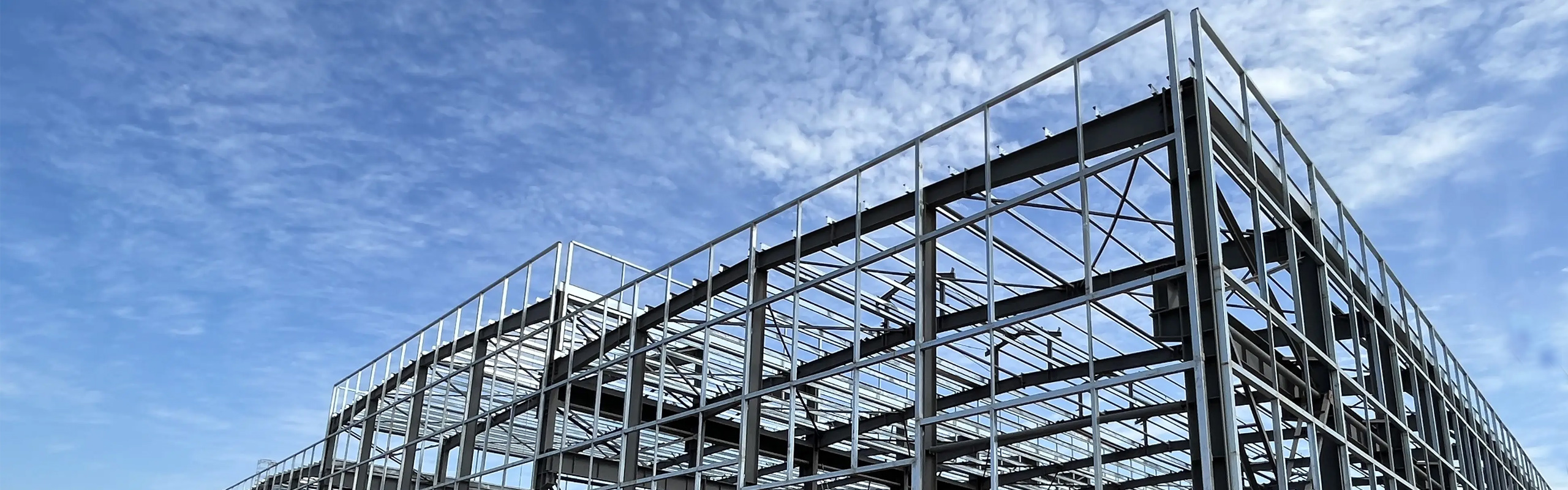
Steel structure mainly refers to structures where the main load-bearing components are made of steel. This includes steel columns, steel beams, steel foundations, steel trusses (generally steel trusses are used for factory buildings with larger spans), and steel roofs. Note that steel structure walls can also be maintained with brick walls. Due to the increase in steel production in China, many steel structure factories have been built, which can be divided into light and heavy steel structure factories. Industrial and civil buildings made of steel are called steel structures.
What is the impact of the second-floor loft steel component fabrication on steel structure factory projects? Each building is composed of various components, and the main functions of each component are also very different. Steel components are now the main components of many building structures, and the steel components used in various parts have different properties. Steel structure factory buildings are very popular in manufacturing powerhouses. In China, a manufacturing powerhouse, steel structure factory buildings with large spans are common.
Previous Page:

Tel:
0871-63926562|13700675159 (Mr. Liu)
Email:
Address:
Room 308, Building 3, No. 18, Courtyard, Central Park, China Resources Gold Land, Wujia Dam, Guandu District, Kunming City
Copyright: Yunnan Tiehan Steel Structure Engineering Co., Ltd.

Follow us

Add my WeChat